


This Day in History: Bea Arthur's WWII Service
At about this time in 1943, a Marine arrives at Camp Lejeune. You may know Bea Arthur for her Hollywood success and roles on Maude and The Golden Girls, but did you know she was also a Marine during World War II?
She wasn’t Bea Arthur back then. When she applied to the Marine Corps Women’s Reserve, her name was Bernice Frankel. She’d applied just five days after the Marines announced the creation of the Women’s Reserve on February 13, 1943.
“I was supposed to start work yesterday,” she soon wrote, “but heard last week that enlistments for women in the Marines were open, so decided the only thing to do was to join.” The letter concluded with her willingness “to get in now and do whatever is desired of me.”
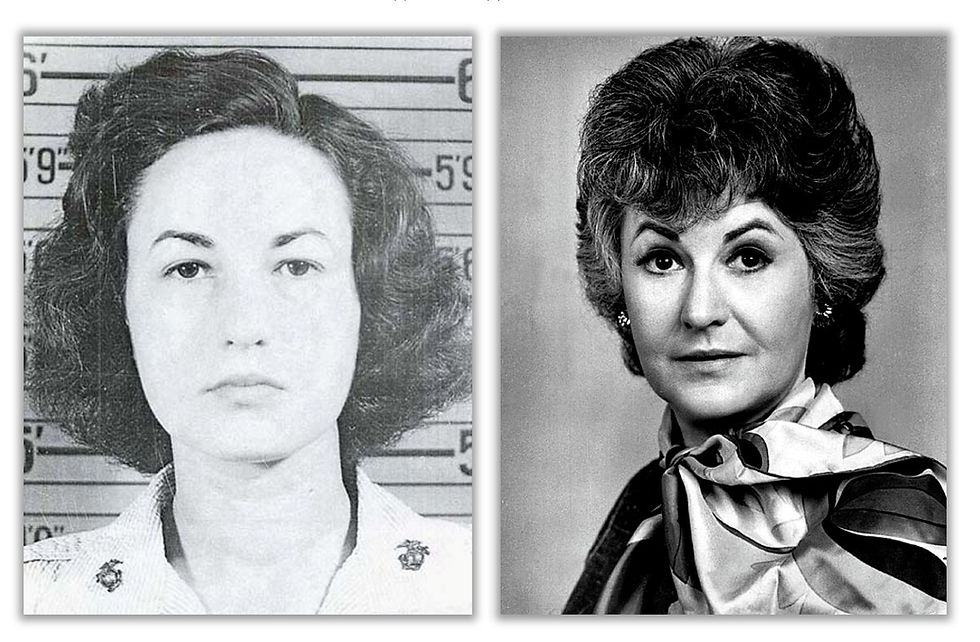
Why did she join? Arthur never talked publicly about the decision, but she was the daughter of Jewish immigrants. Perhaps the war felt personal? Either way, she was soon wading her way through a challenging application process.
Because the Marines would take only the best of the best.
Oh, to be a fly on the wall during her interviews? “Described as having a poised and trim appearance,” the National WWII Museum explains, “(and exhibiting “meticulous good taste”), Arthur was also considered to be ingratiating, frank, and open, though overly aggressive and argumentative. A special note on one assessment read: ‘Officious—but probably a good worker if she has her own way!’”
Private Frankel began at Marine Corps Headquarters, working as a typist. Presumably, she found that boring because she soon requested a transfer to Motor Transport School at Camp Lejeune. She’d grown up in New York, which made her request an interesting one. After all, many girls raised in the city didn’t drive much. Nevertheless, her request was approved in June 1943, and she would serve as a truck driver and dispatcher for much of the rest of the war.
She performed well, obtaining promotions and an honorable discharge as staff sergeant in September 1945.
By then, she had married fellow Marine Robert Aurthur. The marriage wouldn’t last, but she kept the last name (sort of). “Arthur” made a better stage name than “Aurthur” when she later went to Hollywood.
Her time as an actress became legendary, of course, but she never spoke of the Marines—even when asked about it during a 2001 interview.
“How did World War II affect you and your family?” the interviewer asked. “Like everybody else,” she paused. “Traumatic.” The interviewer jumped in again: “I had read somewhere that you joined the Marines. Is that true?” “Oh, no. . . . No,” Arthur laughed, quickly changing the subject.
Her military personnel file became public after her passing, raising questions about the exchange.
Why deny serving? One National WWII Museum historian believes the “no” wasn’t so much a denial of service as it was a dismissal of the question and an attempt to redirect. “[It’s] not uncommon for people to downplay their service,” Kali Martin notes.
Some wonder, alternatively, if she preferred to separate her military service from her life in Hollywood.
Maybe. Arthur was more straightforward with her son, but he says she “almost never” spoke about being a Marine “beyond saying she could drive any vehicle.”
The Golden Girls author Kate Browne takes a different approach, focusing on reasons Arthur would have been a Marine in the first place. “Her service becomes like evidence of badassery,” Browne concludes. She notes that Arthur was generally unafraid to support causes she believed in. “I think there’s a loyalty. . . . it makes sense to me if there were a call for service in WWII, she would answer that call.”
A rather unexpected story from the Greatest Generation. Why do you think she did what she did?

Primary Sources:
Bea Arthur on her rumored stint in the Marines (video)
Bea Arthur, US Marine (National WWII Museum; April 12, 2018)
David Vergun, Before Stage and Screen, Bea Arthur Shined as a Marine (Dept. of Defense; Oct. 13, 2021)
Kari Williams, This ‘Golden Girls’ Actress Was Also a US Marine (Military.com; updated Aug 22, 2024) (also appeared in Reserve & National Guard Mag., Nov. 10, 2021)
Marine Corps Application (Bernice Frankel; Feb. 18, 1943)
#VeteranOfTheDay Marine Veteran Bea Arthur (Dept. of Veterans Affairs; Mar. 3, 2020)
Comments